Electrical conductivity is a material property that describes how easily electrical current can flow through a substance. While conductivity is a fundamental concept in electrical engineering, it also plays an important role in manufacturing, quality assurance, aerospace maintenance, material verification, and recycling operations.
Electrical conductivity is represented by the Greek symbol sigma and the derived SI unit for electrical conductivity is represented in Siemens per meter (S / m).

A material's conductivity depends on several factors, including its composition, structure, and the number of free electrons available to carry electrical current. Because every material has a characteristic range of conductivity, measuring conductivity can provide valuable insight into material properties and overall quality. Solid or granular substances, therefore, have different conductivities.
Conductivity testing offers a fast, non-destructive way to verify materials, assess processing conditions, and confirm that components meet application requirements. Whether validating incoming materials, evaluating heat treatment results, or sorting alloys, conductivity measurements help ensure consistent quality and reliable performance.
Where Is Electrical Conductivity Testing Used?
Electrical conductivity testing is used across a wide range of industries where material properties and product reliability are critical.
Typical application examples where materials used are tested for their electrical conductivity are:
- Manufacturing of Printed Circuit Boards (PCBs): Verify the quality of copper by measuring the electrical conductivity.
- Testing the Discharge Capacity of Components: Evaluate the condition of materials after a component has been exposed to operational stress (like lightning strikes).
- Testing the Electrical Conductivity of Insulators: Ensure the quality of electrical insulation and power transmission applications.
Since different metals and alloys exhibit unique conductivity characteristics, conductivity testing measurements can help verify that the correct material is being used before additional value is added through machining, forming, assembly, or final production.

Conductivity testing is also widely used for material identification. Since different metals and alloys exhibit unique conductivity characteristics, measurements can help verify that the correct material is being used before additional value is added through machining, forming, or assembly.
Typical material verification applications include:
- Incoming material inspection for quality assurance.
- Alloy verification in manufacturing environments.
- Precious metal verification in jewelry production.
- Material sorting in recycling operations.
- Differentiating between metals such as aluminum, copper, brass, titanium, and other conductive materials.
Because conductivity testing is fast and non-destructive, it allows organizations to make informed decisions without damaging the material being inspected.
How Is Electrical Conductivity Measured?
Electrical conductivity can be measured in different ways depending on the application, material, and inspection requirements. Two common approaches are the Van der Pauw method and eddy current conductivity measurement.
Each method has advantages, but for industrial quality control and production environments, speed, repeatability, and ease of use are often key deciding factors.
Conductivity Measurement by the Van der Pauw Method
The Van der Pauw method is a technique used to measure electrical conductivity by recording the voltage drop of a defined current. The measurement setup determines the electrical resistance, which can then be converted into electrical conductivity when the layer thickness is known.
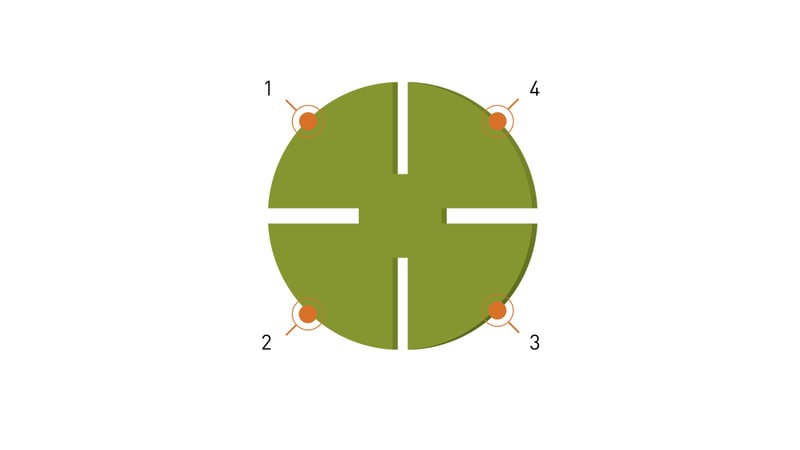
Van der Pauw Method
The material is contacted via four pins. This step is the most error-prone one, since the contact quality is decisive for the measurement. Achieving this depends on various factors: on the one hand, on possible soiling or unevenness on the surface, on the other hand, on the wear of the contact tips.
For this reason, the Van der Pauw method can be difficult to use in serial production or fast-paced industrial environments where repeatability and efficiency are essential.
Eddy Current Measurement of Electrical Conductivity
Eddy current conductivity testing provides a practical alternative for many industrial applications.
With this method, eddy currents are generated in conductive materials using an alternating magnetic field. These eddy currents create their own secondary magnetic field, which interacts with the primary field introduced by the probe. This interaction can then be measured and evaluated.
Conductive materials influence the amplitude and phase of the secondary field. The phase shift between the primary and secondary field can be used as a measure of electrical conductivity. By calibrating this phase shift in relation to known conductivity values, an eddy current instrument can accurately measure the conductivity of a material.
One of the biggest advantages of eddy current conductivity measurement is that it is contactless and non-destructive. The surface of the component remains unaffected, which makes the method especially useful for finished parts, valuable materials, and applications where preserving the test object is important.
Common Challenges in Conductivity Measurement
While eddy current conductivity testing offers several advantages, accurate measurement depends on the right setup, calibration, and inspection conditions.
One important factor is the distance between the eddy current probe and the measuring surface. This distance, often referred to as lift-off, can influence measurement accuracy. Many eddy current instruments include functions that help measure or compensate for this distance to support more reliable results.
Temperature is another important consideration. Conductivity is strongly dependent on temperature. If the temperature of the test object differs from the temperature of the measuring probe, the calibration curve used to determine conductivity may no longer be accurate. For precise measurement, the sensor head and component should be thermally aligned so a consistent temperature level can be achieved.
Surface geometry can also create challenges. Measuring conductivity on a curved surface, such as a shaft or rounded component, requires the proper probe selection and calibration. If the probe head is significantly larger than the radius of the test surface, measurement accuracy may be affected. In these cases, the instrument may need to be calibrated for different radii to produce reliable results.
Frequency selection also plays a role. The formation of eddy currents and the secondary field they generate depends on the frequency used. Eddy currents only form from a few hundred hearts up to several kilohertz. Higher frequencies (up to one megaherz) are often required when measuring very thin materials or layers. For this reason, eddy current instruments may need to be calibrated at different frequencies depending on the material and application.
Understanding these factors helps quality teams improve measurement repeatability and confidence in the results.
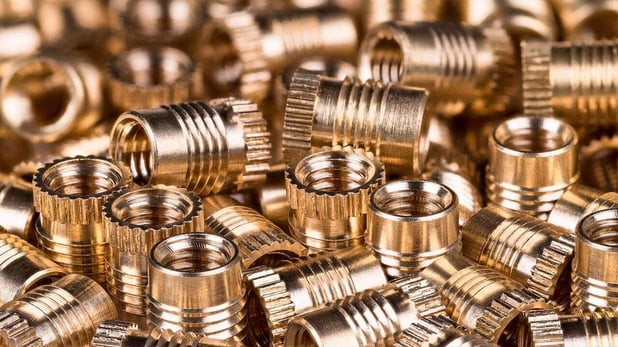
Conductivity Measurement Solutions from FOERSTER
For organizations that rely on accurate conductivity measurements, the SIGMATEST from FOERSTER provides a fast and reliable solution for material verification, quality control, and heat treatment assessment.
The portable instrument is used in aerospace maintenance, industrial manufacturing, metallurgy, and recycling applications where accurate material characterization is essential. It supports conductivity testing for material sorting, alloy verification, heat damage detection, and in-process inspection.
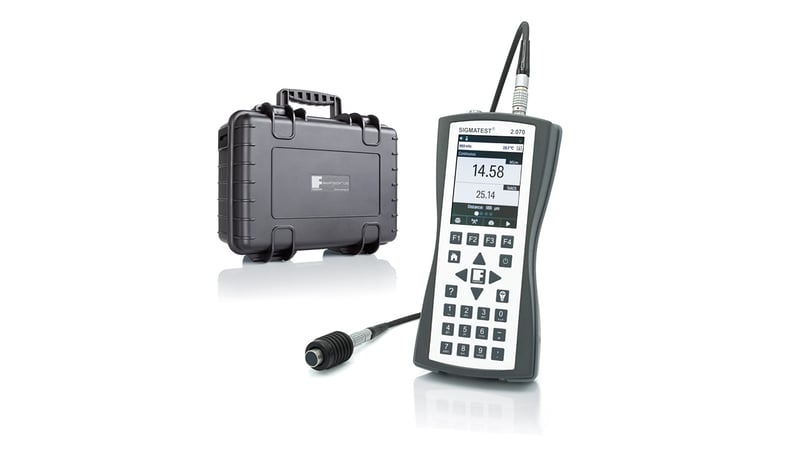
Download the SIGMATEST Product Information
The SIGMATEST offers five selectable test frequencies and high measurement accuracy, allowing users to evaluate a broad range of materials and applications. Even at a high frequency of 960 kHz, the device delivers precise measurements, making it suitable for very thin materials.
Built-in temperature compensation automatically normalizes measured conductivity values to 20°C. This helps improve consistency and supports reliable, repeatable results even when testing conditions vary.
For maintenance and industrial users, the SIGMATEST provides an efficient way to verify materials, support quality decisions, and maintain confidence in the inspection process.
Frequently Asked Questions About Electrical Conductivity Testing
What is electrical conductivity?
Electrical conductivity describes how easily electrical current can flow through a material. Materials with many freely moving electrons typically have higher conductivity.
Why is electrical conductivity important in manufacturing?
Electrical conductivity can provide insight into material composition, processing condition, and overall quality. Manufacturers use conductivity testing to verify materials, support quality control, and reduce the risk of using incorrect or inconsistent materials.
How is electrical conductivity measured?
Electrical conductivity can be measured using several methods, including contact-based methods such as the Van der Pauw method and non-destructive methods such as eddy current conductivity testing.
What are the advantages of eddy current conductivity testing?
Eddy current conductivity testing is fast, contactless, and non-destructive. It can be used for material verification, heat treatment assessment, quality control, and automated production testing.
What industries use conductivity testing?
Conductivity testing is used in aerospace, electronics, manufacturing, metallurgy, recycling, coin minting, jewelry production, and other industries where material identification and quality assurance are important.
Key Takeaway
Electrical conductivity testing helps manufacturers and inspectors better understand the materials they use every day. From incoming goods inspection to heat damage detection and alloy sorting, conductivity measurement provides fast, non-destructive insight that supports stronger quality control and more reliable production decisions.
With the right measurement technology, teams can verify materials quickly, reduce uncertainty, and improve confidence in both the inspection process and the final product.
Share this
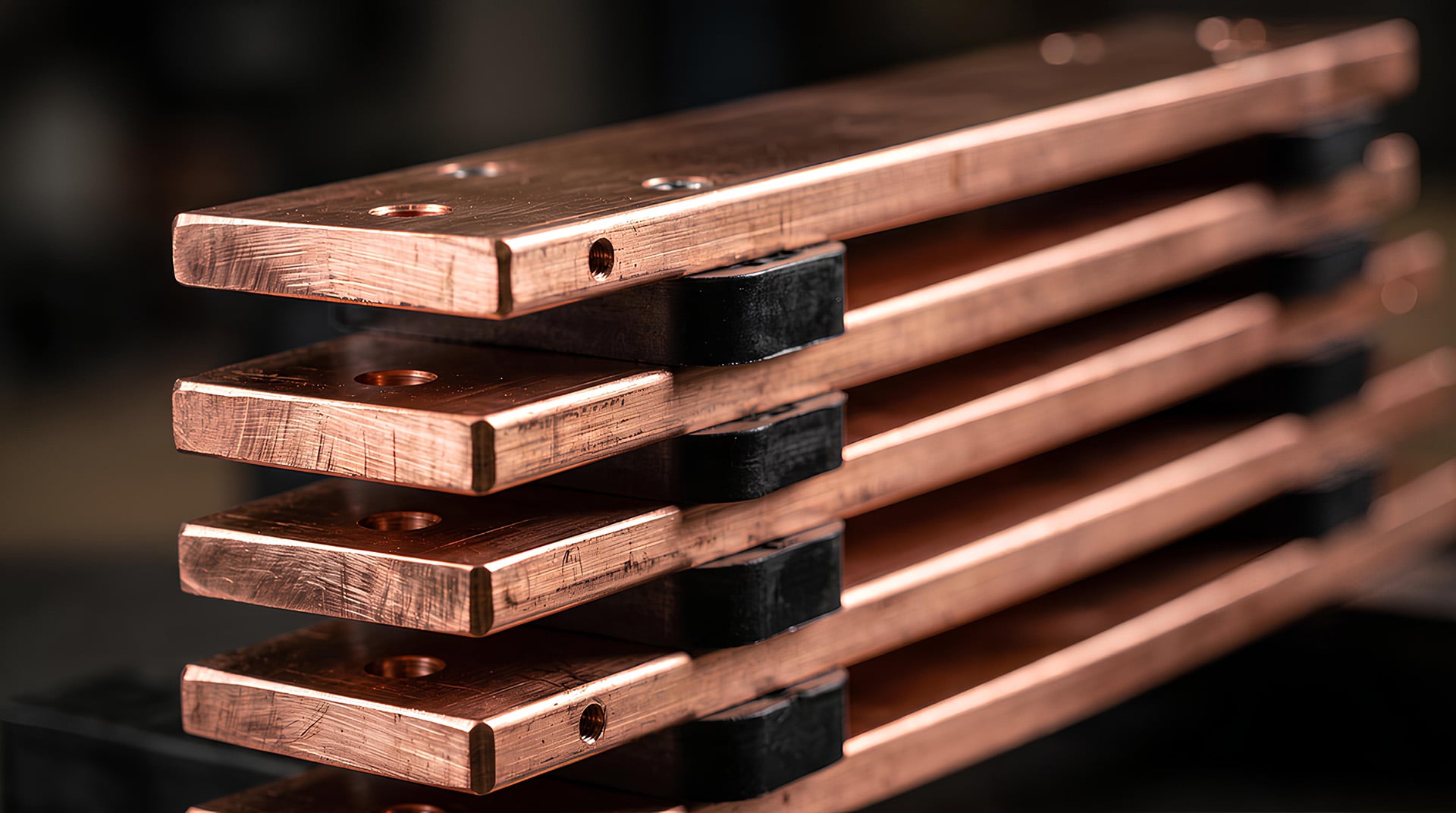
Measuring Conductivity in Copper and Aluminum Bus Bars
6 Factors Affecting Your Electrical Conductivity Measurements