

If you produce or process semi-finished bar material, surface quality is only one part of the inspection challenge.
A bar can appear defect-free from the outside and still contain defects that affect how the material performs in later applications. These hidden flaws may not show up during visual inspection, dimensional checks, or surface-focused testing. In many cases, they are only discovered when the material is forged, machined, heat-treated, or placed into service.
By then, the cost of the defect is much higher.
Sub-surface defects can begin at several stages of production, including melting, casting, solidification, cooling, and rolling. Even small changes in temperature, chemistry, pressure, or material flow can create discontinuities that remain trapped inside the bar.
Common Internal Defects Found in Steel Bars
Some of the most common internal defects found in semi-finished bar material include:
- Centerline segregation: Alloying elements and impurities concentrate near the center of the cast section, creating weaker internal zones that can affect material consistency and performance.
- Shrinkage cavities and centerline porosity: As metal cools and solidifies, it naturally shrinks. If the material is not fed evenly during this process, small internal voids can form.
- Non-metallic inclusions: Oxides, sulfides, slag, or other foreign particles can become trapped in the steel during melting, refining, or casting.
- Internal cracks: Thermal stress, casting strain, improper cooling, or rolling stress can create cracks beneath the surface of the material.
- Hydrogen flakes or internal bursts: Trapped hydrogen can create internal cracking that may not be visible externally.
Why Internal Material Quality Matters
Although a bar may appear solid on the outside, internal voids, cracks, inclusions, or internal inhomogeneities can significantly affect downstream processing and final product performance.
Semi-finished bars often turn into bearings, gears, shafts, fasteners, forged components, aerospace parts, automotive components, and precision-machined products. If an internal defect remains undetected, it can create problems throughout the manufacturing process.
These issues may include:
- Poor machinability
- Cracking during forming operations
- Inconsistent heat treatment results
- Reduced fatigue strength
- Premature component failure
- Increased scrap and part rejection
For critical applications, internal soundness is just as important as surface quality.
How Ultrasonic Testing Detects Internal Defects
Ultrasonic testing (UT) has become one of the most widely used non-destructive testing methods for evaluating the internal condition of semi-finished steel bars.
Instead of cutting into the material or destroying a sample, ultrasonic testing uses high-frequency sound waves to inspect the interior of the bar. During inspection, a probe introduces sound waves into the material. As the waves travel through the bar, they reflect whenever they encounter a change in material structure or a discontinuity such as a crack, void, or inclusion.
The inspection system analyzes these reflected signals to identify the location and characteristics of potential defects.
Benefits of Ultrasonic Testing for Semi-Finished Bars
Ultrasonic testing is particularly valuable because many internal defects cannot be detected reliably using visual inspection or surface-focused testing methods.
Key benefits include:
- Non-destructive evaluation of internal material quality
- Inspection of the full material volume
- Detection of hidden discontinuities before downstream processing
- Improved confidence in material integrity
- Reduced risk of costly failures later in production
As quality requirements continue to increase, manufacturers often need more than a basic internal inspection. They need inspection systems that provide greater coverage, improved repeatability, and the ability to support automated production environments. This is where phased-array ultrasonic testing becomes especially valuable.
What Is Phased-Array Ultrasonic Testing?
Phased-array ultrasonic testing (PAUT) is a form of ultrasonic testing used to evaluate the internal condition of a material.
Like conventional ultrasonic testing, phased-array systems use high-frequency sound waves to identify internal discontinuities such as cracks, voids, inclusions, and other material anomalies. Both methods are widely used throughout the metals industry because they allow manufacturers to inspect internal material quality without cutting into or damaging the product.
Conventional Ultrasonic Testing vs. Phased-Array Ultrasonic Testing
Conventional ultrasonic testing typically uses one or more transducers to introduce sound waves into the material. The reflected signals are then analyzed to identify potential defects and evaluate material integrity.
Phased-array ultrasonic testing follows the same basic inspection principle but uses a probe containing multiple ultrasonic elements. These elements can be controlled electronically, allowing the sound beam to be directed and focused in different ways during the inspection process.
Because the beam can be electronically adjusted, phased-array systems offer greater flexibility for inspecting various material geometries and applications. The technology can also support the collection of more detailed inspection data, depending on the inspection requirements.
Both conventional UT and phased-array UT play important roles in industrial inspection. The most appropriate solution depends on factors such as material type, product geometry, inspection objectives, production speed, and quality requirements.
Why Phased-Array Ultrasonic Testing Is Used for Bar Inspection
For semi-finished bar material, manufacturers often need to evaluate a range of potential internal quality issues while maintaining consistent inspection performance in production.
Phased-array ultrasonic testing can support these objectives by allowing inspection parameters to be tailored to the application and material being tested. This flexibility makes the technology well suited for automated bar inspection systems where repeatability, coverage, and production efficiency are important considerations.
At the same time, internal defect detection is only one part of a complete quality assurance process.
Today’s bar producers may need to verify:
- Internal defects
- Surface cracks
- Near-surface discontinuities
- Longitudinal defects
- Transverse defects
- Dimensional variation
- Material grade verification
- Hardness variation
- Defect location and marking
- Test result documentation and traceability
Managing these requirements through separate systems, suppliers, and service organizations can increase operational complexity and create challenges related to integration, maintenance, training, and support.
As a result, many manufacturers are looking for inspection solutions that combine internal defect detection with a more integrated approach to quality assurance.
Bringing Phased-Array Ultrasonic Testing Into Production
Bar manufacturers need more than defect detection. They need complete inspection systems that deliver reliable and repeatable results while keeping pace with production demands.
Inspection systems must perform consistently across different material grades, bar sizes, and operating conditions. They must support traceability requirements and integrate smoothly into existing manufacturing workflows.
Inspection Requirements Go Beyond Internal Defect Detection
A phased-array ultrasonic system may provide excellent internal defect detection capabilities, but internal inspection is only one part of the overall quality process.
Manufacturers often need to verify surface quality, dimensional accuracy, material grade, hardness, defect location, and reporting requirements while supporting downstream handling decisions.
When these functions are spread across multiple inspection stations and multiple suppliers, complexity increases quickly.
A Phased-Array Ultrasonic Testing Solution for Semi-Finished Bars
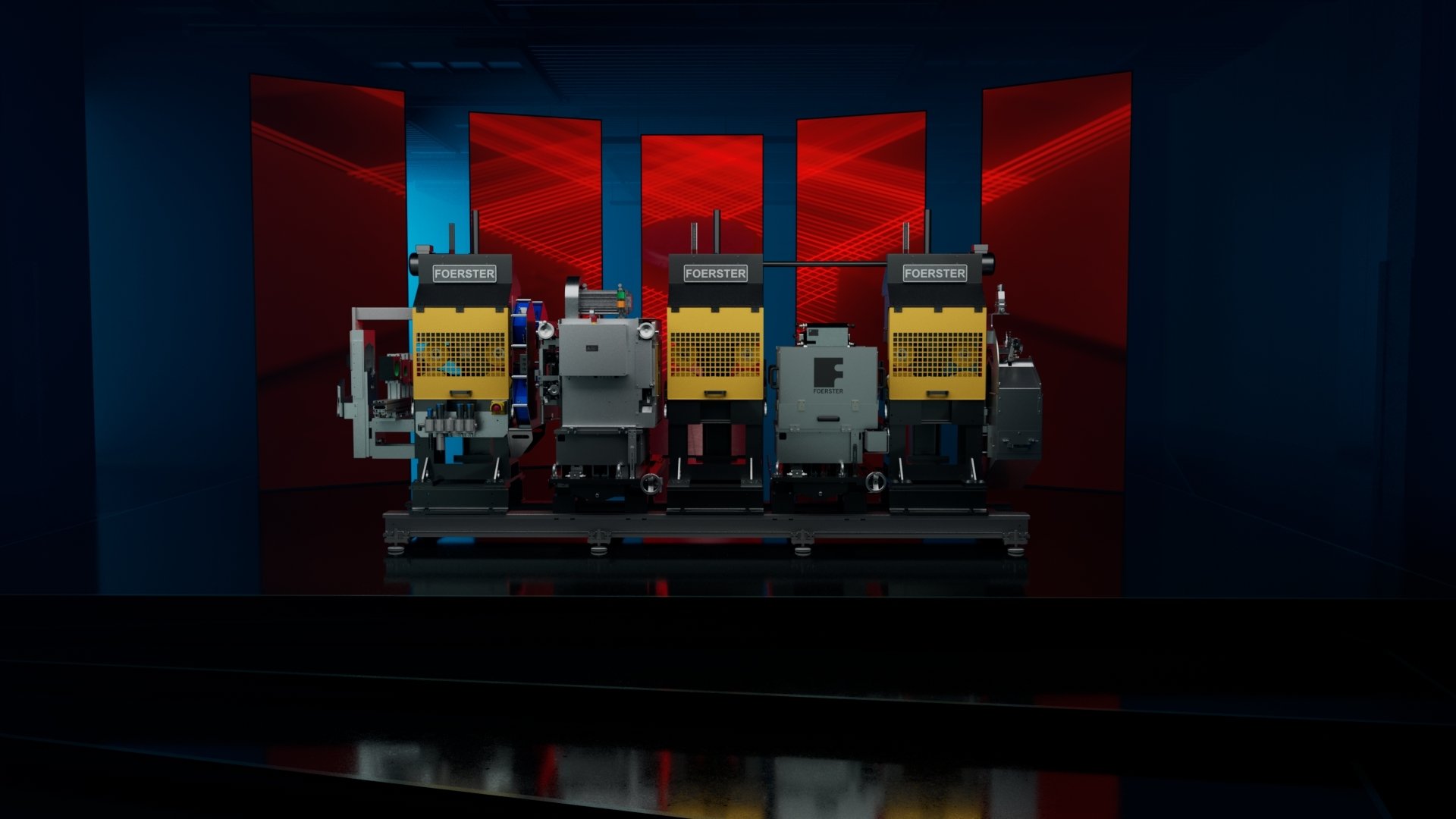
To help manufacturers address these challenges, FOERSTER developed BARPROOF as a complete phased-array ultrasonic testing solution for semi-finished bar inspection.
At the heart of the system is advanced phased-array ultrasonic technology designed specifically for round, square, and hexagonal bar material. BARPROOF supports inspection of bars ranging from approximately 10 mm to 140 mm in diameter and helps manufacturers identify internal quality concerns before they become downstream production problems.
 Detecting Internal Defects with BARPROOF
Using phased-array ultrasonic testing, BARPROOF can help detect:
- Centerline porosity and shrinkage cavities
- Non-metallic inclusions
- Internal cracks
- Segregation-related discontinuities
- Hydrogen flakes and internal bursts
- Small point-shaped defects located near the center or near-surface regions of the material
Because phased-array technology allows the ultrasonic beam to be electronically controlled and optimized, manufacturers benefit from improved inspection coverage and a more detailed evaluation of internal material quality.
Designed for Reliable Production Inspection
Reliable ultrasonic testing depends on maintaining stable coupling conditions and consistent material positioning throughout the inspection process.
To support this, BARPROOF incorporates controlled water management, a rotating water jacket, and centric guidance of the bar through the inspection area. These features help maintain consistent sound transmission and repeatable inspection results across a wide range of production conditions.
The system also supports efficient day-to-day operation through:
- Stored inspection recipes for different materials and dimensions
- Automatic logging of inspection results
- Fast changeovers between bar sizes
- Compact sensor design for easier integration
- Industrial-grade components designed for long service life
- Closed-loop water management to reduce consumable usage
- Robust system construction to minimize unplanned downtime
For producers, these capabilities help transform phased-array ultrasonic testing from a laboratory-based inspection method into a practical tool for continuous production quality assurance.
Building a Complete Bar Inspection System
While phased-array ultrasonic testing plays a critical role in detecting internal defects, complete bar quality assurance often requires additional inspection technologies.
.jpg?width=4000&height=3000&name=240226_Linie_4000x3000%20(1).jpg)
BARPROOF can be integrated with other FOERSTER inspection solutions, including:
- DEFECTOMAT for eddy current surface and near-surface inspection
- CIRCOGRAPH for rotating probe surface crack inspection
- CIRCOFLUX for AC magnetic flux leakage inspection
- Dimensional gauging systems
- Hardness and material verification solutions
- Paint marking functionality
- Automated handling and sorting options
Rather than assembling individual inspection stations from multiple vendors, FOERSTER can help you develop a complete inspection line tailored to your material, quality requirements, production speed, handling concept, and traceability goals.
The result is a more integrated quality process, reduced supplier complexity, and a single partner for system design, installation, application support, training, spare parts, and service.
Key Takeaways: How to Improve Semi-Finished Bar Inspection
Improving semi-finished bar inspection starts with understanding that surface quality is only one part of the material quality story. Internal defects can remain hidden until later stages of production, where they become more expensive and more difficult to manage.
Phased-array ultrasonic testing helps manufacturers inspect the internal condition of bar material without damaging the product. When applied in a production-ready system, it can support better defect detection, stronger repeatability, and greater confidence in material quality.
For many producers, the next step is not simply adding another inspection station. It is building a more complete inspection process that connects internal defect detection, surface inspection, dimensional control, material verification, marking, and documentation into one coordinated quality strategy.
Questions to Ask About Your Current Bar Inspection Process
If you are evaluating your current inspection process, start with these questions:
- Can you reliably detect internal defects before material moves downstream?
- Are you verifying both internal and surface quality?
- Do you have consistent inspection coverage across different bar sizes and grades?
- Can your team quickly change settings between products or dimensions?
- Are inspection results automatically documented for traceability?
- Are defect locations clearly marked for downstream handling?
- Are multiple suppliers making service, training, or integration more complicated?
- Is your inspection process keeping pace with customer quality requirements?
If the answer to several of these questions is no, it may be time to consider a more integrated approach.
Next Steps for Building a Stronger Inspection Strategy
Start by reviewing the defects and quality risks most common in your production process. Then look at where those risks are currently inspected, how results are documented, and how easily your team can respond when an issue is found.
From there, consider whether your current inspection setup supports the level of confidence your customers expect.
FOERSTER can help you evaluate your application, identify the right inspection technologies, and design a solution built around your material, production speed, quality requirements, and long-term support needs.
With BARPROOF, FOERSTER gives bar producers a practical way to bring phased-array ultrasonic testing into production while also supporting the broader inspection technologies needed for complete bar quality assurance.
The goal is not just to find defects. The goal is to help you build a more reliable, repeatable, and traceable inspection process that gives you greater confidence in every bar that leaves your facility.
Share this
Detecting Longitudinal Defects in Steel Bars
.png)
Detecting Longitudinal Cracks in SBQ Bars with Eddy Current Testing
.png)